Is mechanical root cutting enough to fix roots in a sewer line?
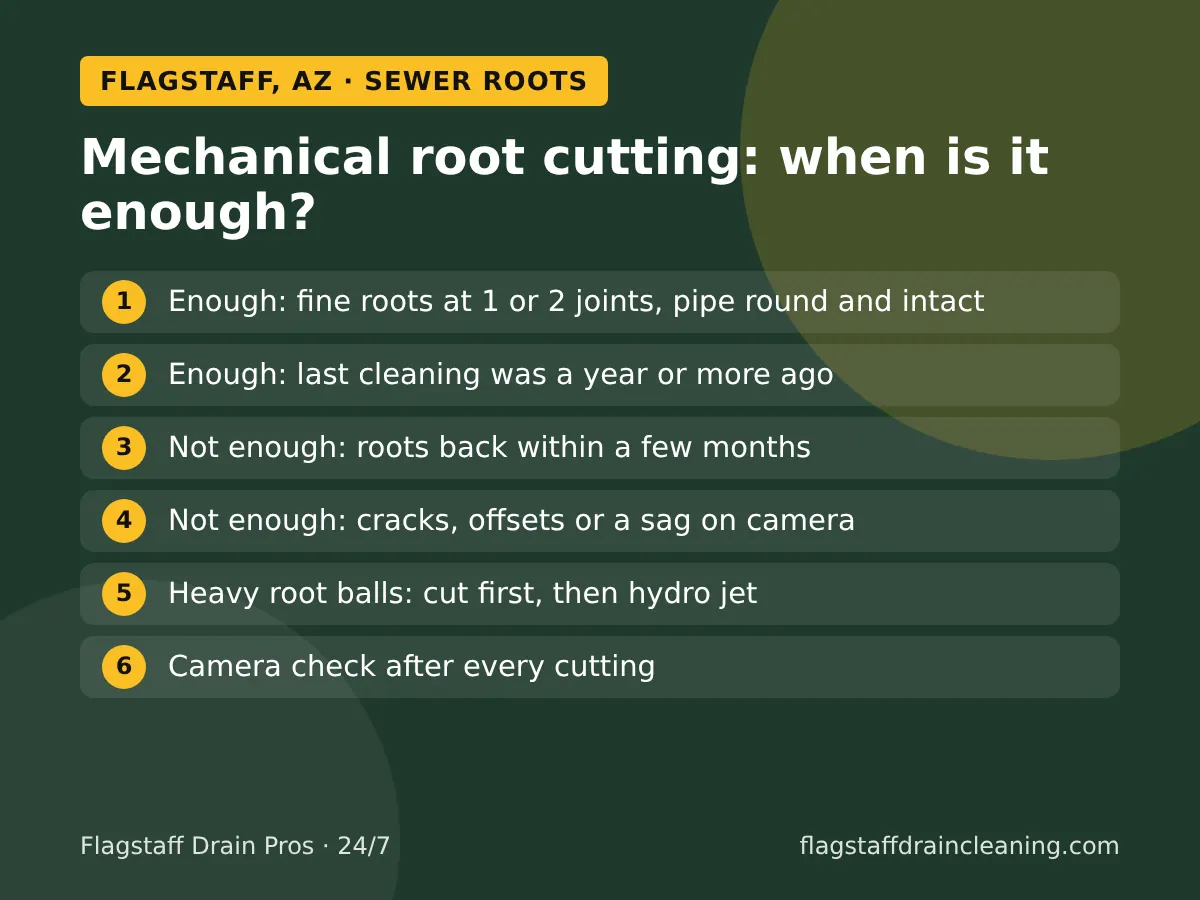
Often, yes, for a while. A root cutter clears the pipe and gets drains working the same visit, and for fine roots at one or two joints it can keep the line clear for a year or more. It is not enough when roots return within months, the camera shows cracked or offset pipe, or the line has sagged. Then jetting, lining or repair makes more sense.
Flagstaff is full of thirsty trees. Ponderosa pines, aspens, cottonwoods and old elms near downtown and Southside send roots toward the warm, moist air leaking from sewer joints. When the toilet gurgles and the basement floor drain backs up, most homeowners just want the line cleared. Our team for root cutting services in Flagstaff does that 24/7. This guide helps you decide what comes next.
How does mechanical root cutting work?
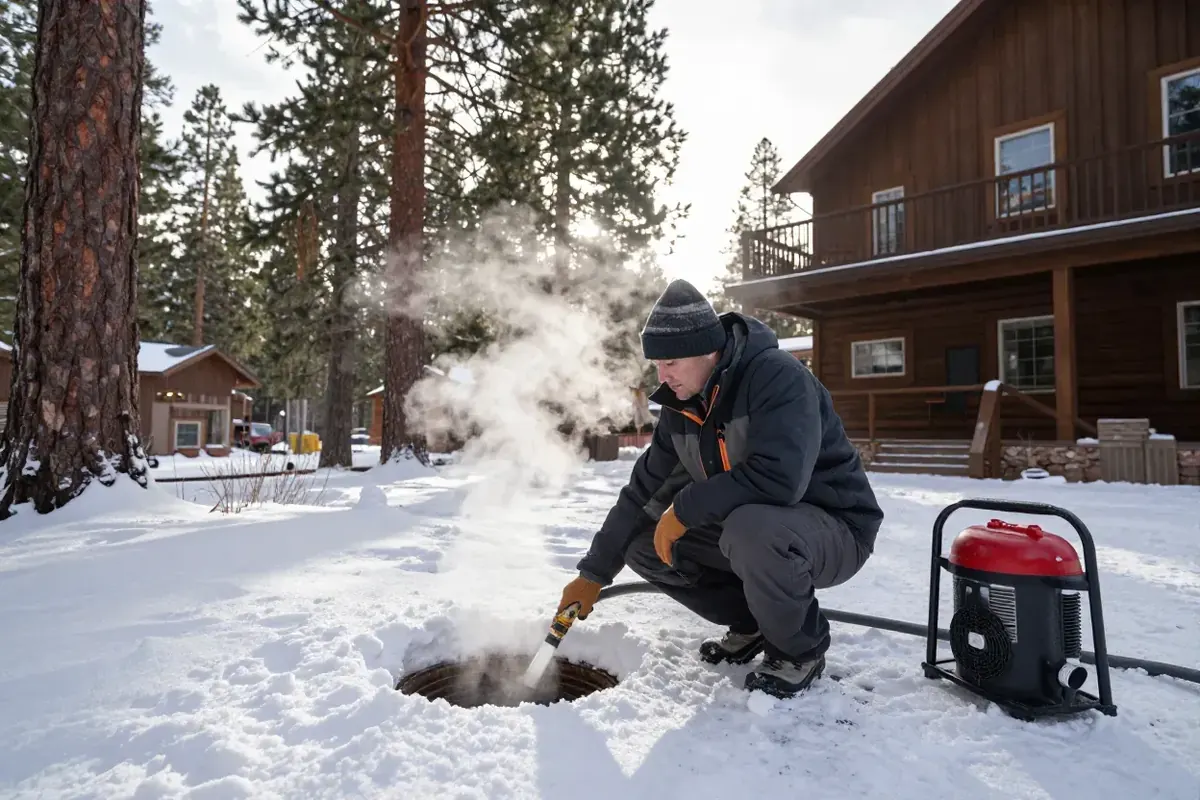
A technician feeds a heavy steel cable into the sewer line through a cleanout. A motor spins the cable, and a cutting head with blades or saw teeth shaves the roots off the inside of the pipe. The tech works the head back and forth through the root mass, then flushes the line and checks the result with a sewer camera.
- Find the access point. An outdoor cleanout is best. Pulling a toilet or going through a roof vent is slower, and roof access is a bad idea in deep Flagstaff snow.
- Pick the head. Heads come in sizes close to the pipe diameter so they cut wall to wall, not just a hole through the middle.
- Cut through the roots in several passes until the cable runs free to the city main.
- Flush the line with water to carry root pieces out.
- Run the camera to see if roots are gone and whether the pipe is cracked, offset or sagging.
When is root cutting enough?
Cutting alone is usually enough when the camera shows thin, hair-like roots at one or two joints, the pipe walls are round and intact, and the line has not needed cleaning in a year or more. In that case, cutting on a schedule is the lowest-cost way to keep the line running, often cheaper than a repair for many years.
- First root problem in the home, or the last one was years ago.
- Roots come in at joints, not through cracks along the pipe.
- No standing water or belly in the line on camera.
- Pipe material is in fair shape, such as newer PVC with a loose joint or sound cast iron.
When is root cutting not enough?
Cutting is not enough when roots grow back within a few months, the camera shows cracks, broken or offset pipe, a sag that holds water, or crushed sections. It also falls short when thick root balls fill the pipe, because a cutter leaves fine roots and stubs that regrow fast. Those lines need jetting, a liner or a repair.
Older Flagstaff homes from before the 1970s often have clay or Orangeburg sewer pipe. Clay joints let roots in every few feet, and Orangeburg can collapse when it is cleaned. If your home is in an older part of town, the camera video decides the plan. If the problem is on the part of the line the city owns, our guide on sewer line repair explains who pays for which section.
Root cutting vs. hydro jetting: which is better?
Cutting removes thick, woody roots fast and is safer on fragile pipe. Hydro jetting uses high-pressure water to scour the full pipe wall, flushing out root hairs, grease and scale, so the line often stays clear longer. For heavy roots, the best result is usually both: cut the main mass, then jet the line clean.
| Factor | Mechanical root cutting | Hydro jetting |
|---|---|---|
| Best for | Thick, woody roots; fragile pipe | Fine roots, grease, scale, full cleaning |
| How clean | Clears a path, leaves some fine roots | Scours the full wall |
| Regrowth | Faster | Slower |
| Typical Flagstaff cost | $350 to $900 for root removal | $450 to $1,000 |
Our page on hydro jetting services explains when a jetter is worth it and how it works in cold weather.
How much does sewer root cutting cost in Flagstaff?
Tree root removal from a sewer line in Flagstaff usually costs about $350 to $900. A basic main line cleaning is about $250 to $550, hydro jetting about $450 to $1,000 and a sewer camera inspection about $200 to $450. Price goes up with no outdoor cleanout, a long line, deep snow or after-hours calls.
Get the price before work starts. Ask whether the camera check is included and whether a return visit within a few weeks costs less if the roots come back quickly.
How often should you cut roots out of a sewer line?
If roots are confirmed and you are not repairing the pipe, plan on cleaning every 12 to 24 months, or sooner if drains slow down. Many Flagstaff homeowners schedule it in late spring or early fall, before roots grow fast in summer and before freezing weather makes access harder.
Watch for early signs: a toilet that gurgles when the washer drains, a slow tub, or water near the floor drain. Calling at the first sign costs less than a full backup on a holiday weekend.
How can you slow root regrowth after cutting?
Keep new trees and large shrubs away from the sewer line path, use a foaming root inhibitor after cleaning if your tech recommends it, and schedule regular cleanings. The only permanent fix is to seal the pipe with a liner or replace the bad section, which stops roots from getting in at all.
- Ask for a copy of the camera video so you know where the roots enter.
- Plant trees at least 10 to 20 feet from the line, farther for cottonwoods and willows.
- Never use copper sulfate in large amounts. It can harm septic systems and the environment.
Flagstaff Drain Pros cuts roots and clears sewer lines across Flagstaff, from Cheshire and Continental to Sunnyside, University Heights and Doney Park. Call (928) 352-0514 any time.
Frequently asked questions
What is mechanical root cutting?
It is a sewer cleaning method that runs a motorized cable with a rotating cutting head through the pipe. The blades shave roots off the pipe walls so water can flow again. A camera check afterward shows how much root mass was removed and whether the pipe is damaged.
How long does root cutting last?
Usually months to a couple of years. Roots grow back through the same joint or crack because cutting does not seal the opening. Lines with small, fine roots last longer between cleanings than lines with thick root masses.
Is hydro jetting better than root cutting?
Jetting cleans the full pipe wall and flushes out root pieces, grease and scale, so it often lasts longer. Cutting is better for thick, woody roots and for old or fragile pipe where high pressure is risky. Many jobs use both: cut first, then jet.
How much does sewer root removal cost in Flagstaff?
Tree root removal from a sewer line in Flagstaff usually costs about $350 to $900. Hydro jetting runs about $450 to $1,000, and a sewer camera inspection about $200 to $450.
Will cutting roots damage my sewer pipe?
Done with the right size head by a trained tech, cutting does not damage a sound pipe. In cracked clay or Orangeburg pipe, any cleaning can make a weak spot worse, which is why a camera check matters.