Why is my garage floor drain clogged?
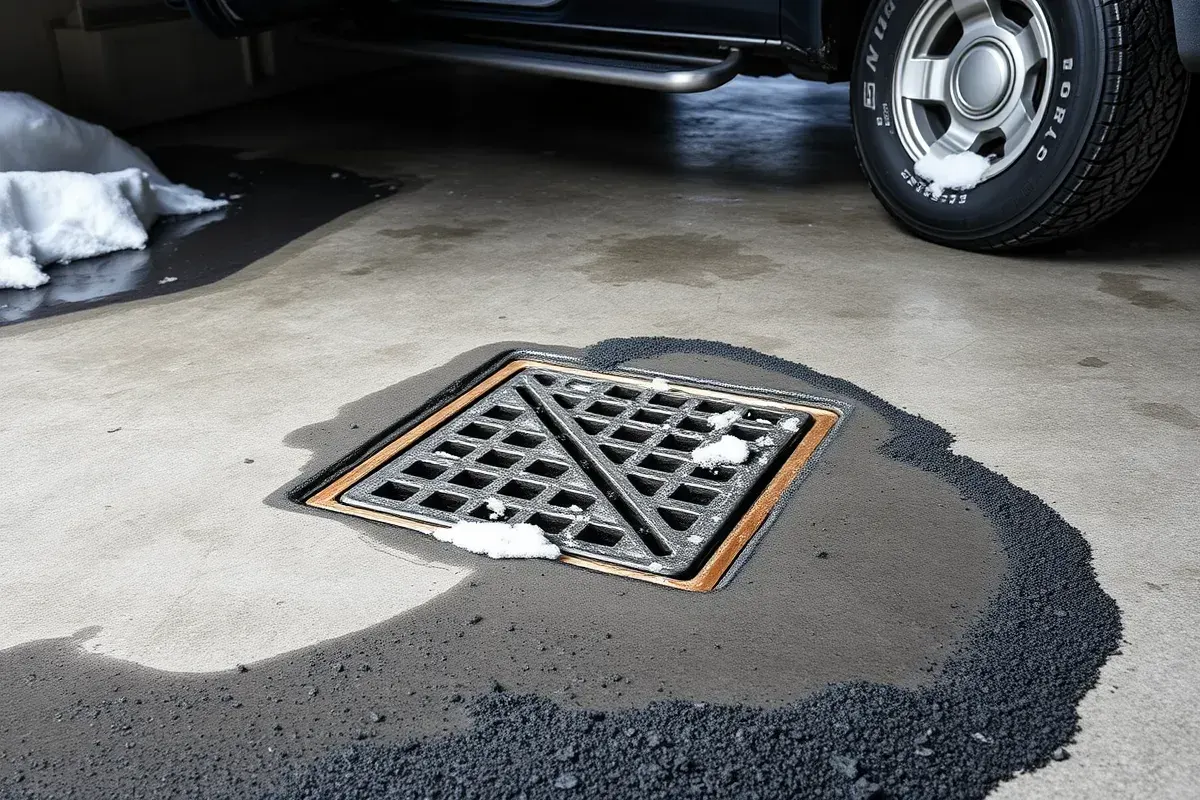
Garage floor drains in Flagstaff clog mostly from cinders, sand and grit that melt off vehicles in winter. That heavy material sinks into the trap or sediment basket and packs tight. Leaves, oil, ice in the trap and a frozen outlet line are the other common causes. Most clogs clear with scooping and a snake.
The city and ADOT spread volcanic cinders on roads after snowstorms. Every time you pull in with a snowy truck or SUV, some of that ends up on your garage floor and in the drain. If the water is already pooling around your tires, our clogged drain repair in Flagstaff team can clear it, day or night.
Where does your garage drain go?
Garage floor drains are built a few different ways. Some tie into the house sewer line through a trap, sometimes with a sand and oil interceptor. Some run to a dry well, which is a gravel pit in the yard. Others slope out to daylight at the edge of the driveway. Where yours goes decides how it clogs and how it is cleared.
| Drain type | How to tell | Common problem |
|---|---|---|
| Tied to the sewer | Water sits in a trap; may smell like sewer when dry | Grit packs in the trap; sewer gas if the trap dries out |
| Sand and oil interceptor | A larger box or lid in the floor | Box fills with sediment and needs pumping or scooping |
| Dry well | No visible outlet; drains slowly into the ground | Gravel clogs with silt over time |
| Drain to daylight | Pipe outlet at the driveway edge or yard | Outlet freezes or gets buried by snow |
If yours ties into the sewer, it shares the main line with the rest of the house. Knowing where your sewer cleanout sits helps a technician reach it fast.
What are the 5 most common causes?
The five common causes are cinders and sand packed in the trap, a full sediment basket or interceptor, frozen water in the trap or outlet, oil and grease that bind grit together, and a buried or frozen outlet in the yard. In older homes, a cracked or sagging line under the slab can also hold grit.
- Cinders and sand. Heavy and sharp, they sink fast and do not wash through like dirt does.
- Full basket or interceptor. Many drains have a basket under the grate that needs emptying a few times each winter.
- Ice. On nights below freezing, water in the trap or the pipe to the yard can freeze solid.
- Oil and grease. Drips from vehicles mix with grit into a sticky sludge.
- Blocked outlet. Plowed snow can bury a daylight outlet, so the line backs up into the garage.
What can you safely do yourself?
Start by lifting the grate and scooping out what you can reach with a gloved hand or a small cup. Empty the sediment basket if there is one. Then pour a bucket of warm, not boiling, water and watch it drain. If it still sits, a hand snake can break up the plug. Check the outdoor outlet for snow or ice.
- Lift the grate. Use a flat screwdriver. Wear gloves; cinders are sharp.
- Scoop it out. Remove sand and cinders down to the trap. A wet vac works well.
- Empty the basket. Rinse it outside, not back into the drain.
- Test with warm water. A bucket of warm tap water also helps loosen light ice.
- Snake it. A 25-foot hand snake can break a packed plug in the trap.
- Check the outlet. If the drain runs to daylight, clear snow and ice from the end of the pipe.
If several drains in the house are also slow, the problem is likely in the main line, not the garage drain. A camera check shows what is going on; see our guide to sewer camera inspection cost.
What should you not do?
Do not pour chemical drain cleaners, antifreeze, motor oil or boiling water into a garage floor drain. Chemicals do nothing to sand and cinders, oil and antifreeze can pollute a dry well or the sewer, and boiling water can crack old pipe or a frozen trap. Do not hose piles of grit into the drain, either.
- Sweep or shovel slush and cinders out the door instead of washing them into the drain.
- Never dump vehicle fluids in the drain; take them to a recycling site.
- Do not use a torch to thaw a frozen trap or pipe.
What does it cost to clear a garage drain in Flagstaff?
Floor drain cleaning usually costs about $150 to $350 in Flagstaff. If the drain is packed with grit for a long distance or the line to the sewer is coated with sludge, hydro jetting at about $450 to $1,000 cleans the full pipe wall. A camera inspection at about $200 to $450 shows cracks, sags or a crushed outlet.
| Service | Approx. price |
|---|---|
| Floor drain cleaning | $150 – $350 |
| Main sewer line cleaning | $250 – $550 |
| Sewer camera inspection | $200 – $450 |
| Hydro jetting | $450 – $1,000 |
Cinders and sand are exactly what a jetter flushes well. When a snake only punches a hole through the plug, our hydro jetting services scour the line clean so it stays open through the rest of the winter.
How do you keep it from clogging again?
Keep grit out of the drain in the first place. Knock snow off the vehicle before you pull in, sweep cinders out of the garage every week or two in winter, and empty the drain basket after big storms. A drain mat or grate filter helps. Keep the garage door closed on cold nights so the trap does not freeze.
- Lay a containment mat under each vehicle to catch melt and cinders.
- Check the drain after every snowstorm from November through April.
- Keep a daylight outlet clear of plowed snow.
- Pour a bucket of water into a sewer-tied drain monthly so the trap does not dry out and let sewer gas in.
- Have the line cleaned in fall if it was slow last winter.
Garages in Doney Park, Kachina Village, Continental and Fort Valley see the most cinders because those roads get treated often. If your garage drain backs up during a thaw along with other drains, read about snowmelt sewer backups before you run more water.
Frequently asked questions
Why does my garage floor drain keep clogging in winter?
In Flagstaff, snow melting off vehicles carries road cinders, sand and grit into the garage. That heavy material settles in the drain trap or sediment basket and packs into a plug. Cold weather can also freeze water in the trap or outlet line.
Can I use chemical drain cleaner on a garage floor drain?
No. Chemicals do not dissolve sand or cinders, and they can damage pipes and splash back on you. They also make it unsafe for a technician to work on the drain. Scoop out solids and use a snake or call for cleaning instead.
Where does a garage floor drain go?
It depends on the home. Some connect to the sewer through a trap or a sand and oil interceptor. Others drain to a dry well or out to daylight in the yard. Knowing where yours goes tells you where a clog or freeze is likely.
How much does it cost to clear a garage floor drain in Flagstaff?
Floor drain cleaning usually costs about $150 to $350 in Flagstaff. If the line is packed with grit for a long run, hydro jetting at about $450 to $1,000 may be needed. A camera inspection is about $200 to $450.
Can a garage floor drain freeze?
Yes. Water sitting in the trap or in an outlet pipe that runs to the yard can freeze in a cold garage. Keeping the garage door closed, adding insulation and clearing grit so water does not sit all help.