What is sewer line cleaning?
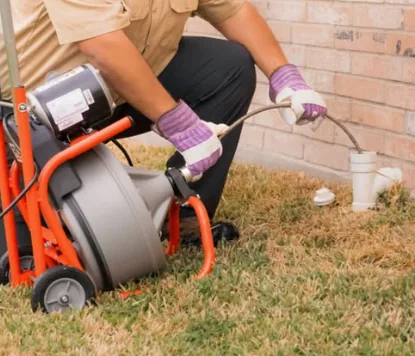
Sewer line cleaning clears the main pipe that carries all of your home's wastewater to the city sewer or septic tank. A technician opens the outside cleanout and runs a heavy-duty cable machine through the line to cut through roots, grease, wipes and other buildup, then tests the flow.
A clog in one sink is a fixture problem. A clog in the main line affects the whole house, because every drain empties into it. That is why main line clogs feel sudden and messy: water has nowhere to go, so it comes back up the lowest drain, often a tub, shower or floor drain.
How do I know my main sewer line needs cleaning?
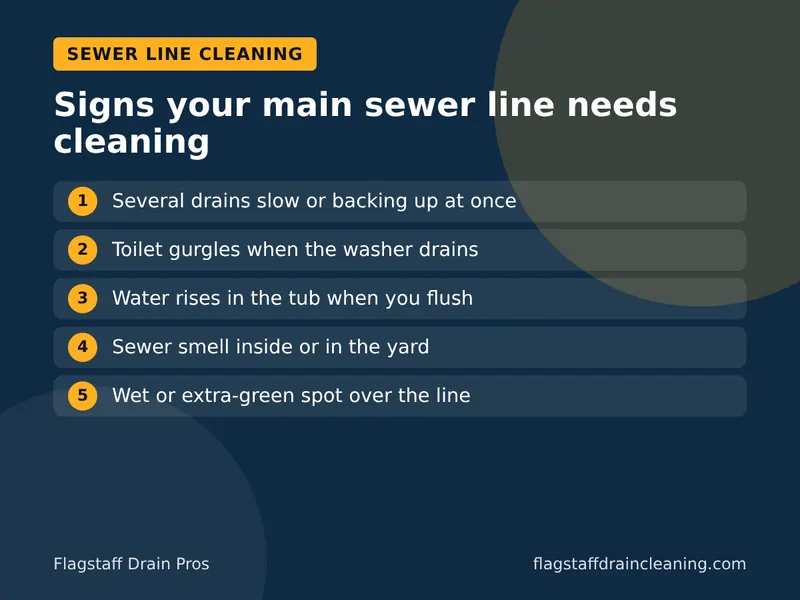
The main line is the likely problem when several drains are slow at once, toilets gurgle when the washer drains, water rises in the tub when you flush, or you smell sewage inside or in the yard.
- More than one drain is slow, especially on the lowest floor
- Gurgling toilets when other fixtures drain. See why Flagstaff drains gurgle
- Toilet water backing into the tub, a classic main line sign
- Sewer smell near floor drains or over the line outside
- Repeat clogs that come back weeks after a quick fix
For a longer list, read signs of a main sewer line clog.
What clogs sewer lines in Flagstaff?
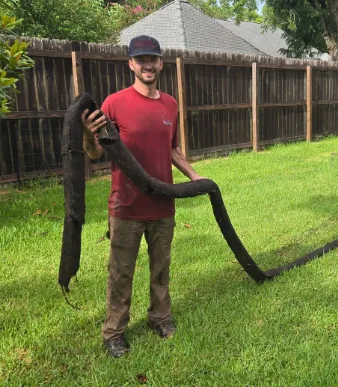
In Flagstaff the most common causes are ponderosa pine roots that grow into pipe joints, grease from kitchen drains, "flushable" wipes, and older clay or cast iron pipe that catches debris. Snowmelt and freeze cycles can also shift older lines.
Roots are the big one here. They find small gaps in older pipe and grow into a net that catches everything else. If roots keep coming back, a camera check helps you plan. Our guide to tree roots in your sewer line explains the options.
What happens during a sewer line cleaning visit?
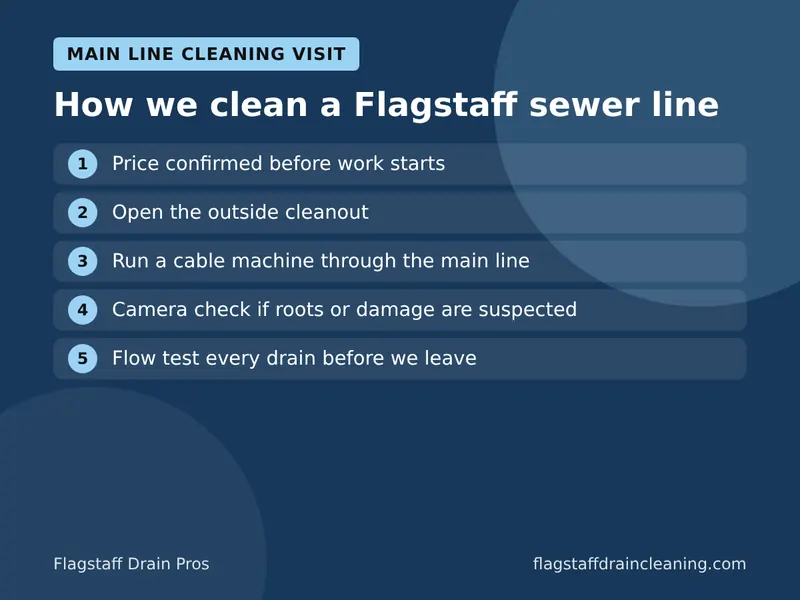
- We ask what is happening and give you the price before work starts.
- We find and open your outside cleanout. Not sure where it is? See how to find your cleanout.
- We run a cable machine with the right cutting head through the main line.
- If roots, a sag or damage are suspected, we suggest a camera inspection so you can see the pipe.
- We flow test your drains before we leave.
Lines with heavy grease or scale may need hydro jetting instead of a cable, because water cleans the full pipe wall. We tell you which method fits and why.
How much does sewer line cleaning cost in Flagstaff?
Main sewer line cleaning in Flagstaff typically costs $250 to $550. The price depends on cleanout access, the length of the line, and what is causing the clog. We confirm the exact price before any work begins.
See every price on our drain cleaning cost table.
Where do you offer sewer line cleaning?
We clean sewer lines across Flagstaff, AZ, including Downtown, Sunnyside, Cheshire, Fort Valley, Continental Country Club, Ponderosa Trails and Mount Elden Foothills, in ZIP codes 86001, 86004, 86005 and 86011. See the full list of neighborhoods we serve.
Sewer Line Cleaning FAQ
Can I clean my own main sewer line?
Rental drain machines can work, but a main line cable can kink, get stuck or damage older pipe. If sewage is backing up, it is safer to call a technician.
How long does sewer line cleaning take?
Most home main line jobs take about one to two hours. Hard-to-reach cleanouts or heavy root growth can take longer.
Will the clog come back?
It depends on the cause. A one-time object usually will not. Roots and grease can return, so we explain what we found and how to slow it down.
Do I need a cleanout for sewer line cleaning?
A cleanout is the easiest way in. Without one, we may work through a toilet opening or roof vent, and we explain the options before starting.
How often should sewer lines be cleaned out?
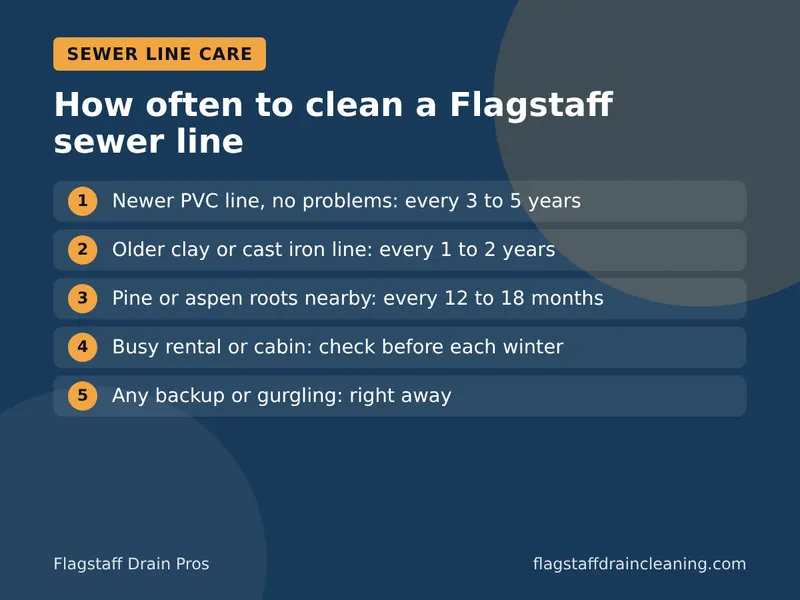
Most Flagstaff homes do well with a professional sewer line cleaning every 2 to 3 years. Older clay or cast iron lines near pine, aspen or cottonwood roots often need it every 12 to 24 months. Our guide on how often to clean a sewer line explains the signs. Main line cleaning costs about $250 to $550.
What causes a home sewer backup?
Most home sewer backups come from a clog in the main line: roots, grease, wipes, a sagging pipe or ice in winter. If more than one drain backs up at once, stop using water and call. See what to do during a sewer backup.