How do tree roots get into a sewer line?
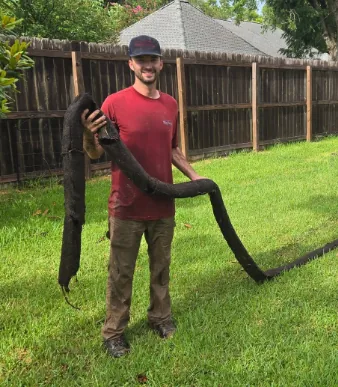
Tree roots grow toward water and nutrients. Your sewer line leaks tiny amounts of warm, moist air and water at cracks and joints. Fine roots slip into those gaps, then grow into a thick mat inside the pipe that catches paper and waste until the line clogs.
Roots do not usually break a healthy pipe on their own. They find a weak spot first. Older clay pipe has a joint every few feet, and each joint is a possible entry point. Older cast iron can crack or rust through over time.
Flagstaff has one of the largest ponderosa pine forests in the country, and many yards have mature pines, aspens and other trees close to the sewer line. Tree-lined areas like Fort Valley and Cheshire, and older neighborhoods with older pipe, see root clogs often.
What are the signs of roots in a sewer line?
The most common signs are slow drains all through the house, gurgling toilets, and a main line that clogs again and again. Sewage backing up into the lowest tub, shower or floor drain is a strong sign. Wet, extra-green patches of lawn over the sewer line can also point to roots and a leak.
- Several drains are slow at the same time
- Toilets gurgle or bubble when other fixtures drain
- The main line clogs again a few months after being cleared
- Sewage comes up in a basement, floor or lower-level drain
- A sewer smell near the cleanout or in the yard
- A soggy, extra-green strip of grass over the sewer path
Root clogs often get worse slowly, then fail all at once. Heavy use can tip a partly blocked line over the edge, like holiday guests, laundry day or a summer monsoon storm. Our homepage has a full list of signs your drain or sewer line is clogged.
How do you know for sure it is roots?
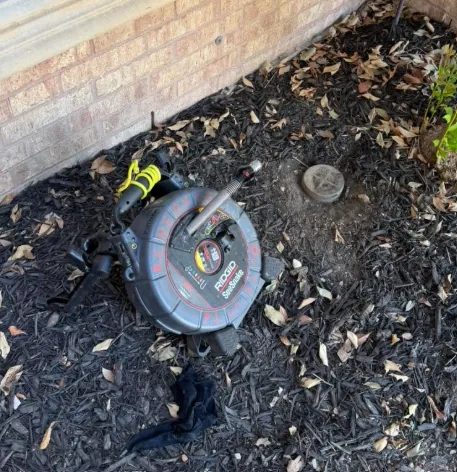
A sewer camera inspection is the only way to know for sure. A small waterproof camera goes into the line through the cleanout and shows live video of the pipe. You see exactly where the roots are, how thick they are and whether the pipe is cracked or sagging.
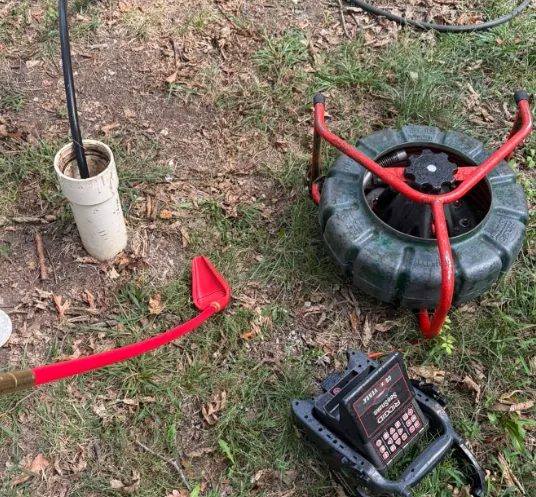
The camera also tells you the pipe type and the depth and distance of the problem. That matters if a repair is ever needed, because it shows the exact spot instead of a guess. Learn more about our sewer camera inspection service.
How are tree roots removed from a sewer line?
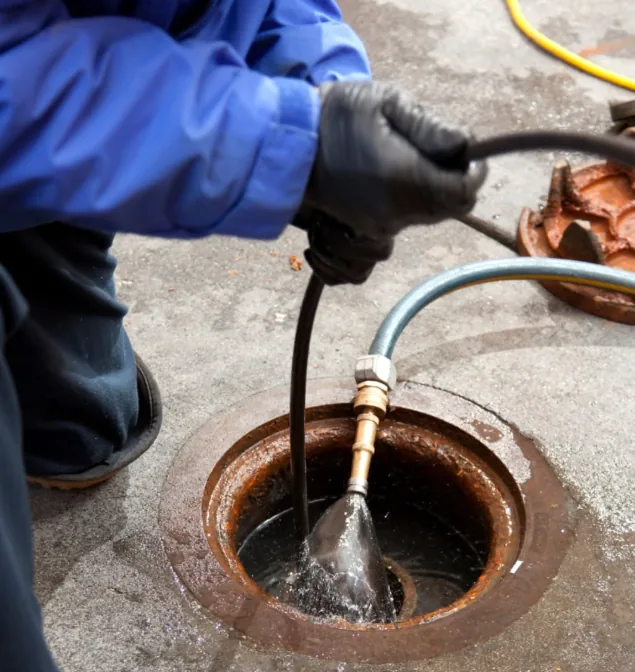
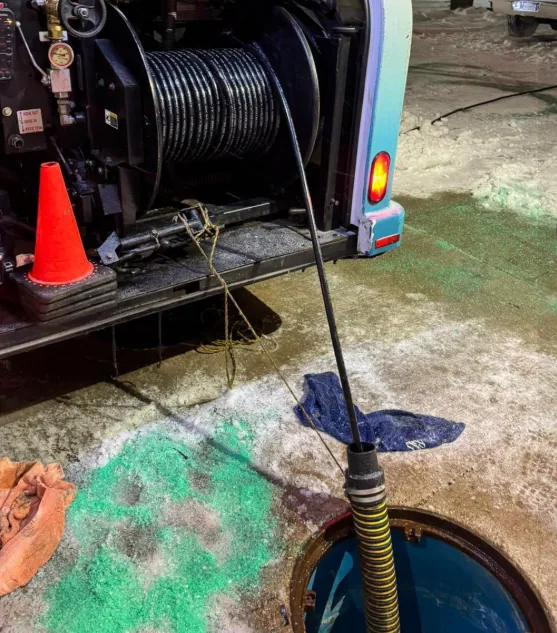
Roots are cut out with a cable drain machine fitted with a root-cutting blade, or washed out with a hydro jetter and root nozzle. Cutting opens the line fast. Jetting cleans the pipe wall more fully, so the roots take longer to grow back. A camera check after cleaning confirms the line is clear.
- Open the line. We access your outside cleanout and get flow moving again.
- Cut or jet the roots. A cable cutter or hydro jetter removes the root mass. See hydro jetting vs. drain snaking for how the two compare.
- Check with the camera. We look at the cleaned line to find cracks or joints where roots got in.
- Talk about next steps. If the pipe is sound, routine cleaning may be all you need. If the pipe is broken, we explain your repair options plainly.
Cleaning removes the roots inside the pipe, but the tree is still there. Roots usually come back through the same opening. That is why repeat clogs are a sign to look at the pipe itself.
How much does tree root removal cost in Flagstaff?
Tree root removal in Flagstaff runs about $350 to $900, depending on how thick the roots are and how long the line is. A sewer camera inspection is about $200 to $450. Hydro jetting is about $450 to $1,000. Prices are approximate, and we confirm yours before work starts.
| Service | Approx. price |
|---|---|
| Main sewer line cleaning | $250 – $550 |
| Tree root removal | $350 – $900 |
| Sewer camera inspection | $200 – $450 |
| Hydro jetting | $450 – $1,000 |
Ranges from our Flagstaff drain cleaning price guide. Final price depends on access, pipe size and how bad the blockage is.
How can I keep roots out of my sewer line?
You cannot stop roots from looking for water, but you can slow them down. Know where your sewer line runs, plant trees well away from it, keep wipes and grease out of the drains, and schedule cleaning before roots fill the pipe if you have had root clogs before.
- Plant smart. Give new trees and large shrubs plenty of room from the sewer path.
- Clean on a schedule. If roots are a known problem, routine cleaning beats an emergency backup.
- Only flush toilet paper. Wipes snag on roots and turn a slow line into a full clog.
- Watch for early signs. Gurgling and slow drains are your early warning. Call before it backs up.
Who is responsible for roots in a Flagstaff sewer line?
In most cases the private sewer lateral, the pipe from your house to the public main, belongs to the homeowner. City of Flagstaff Utilities takes care of the public sewer main. If roots are in your lateral, it is usually your line to clean or repair.
If you are not sure where your line ends and the public main begins, a camera inspection can show the distance to the connection. That helps when talking with the city or your insurance company.
Frequently asked questions
Will tree roots come back after cleaning?
Usually, yes. Cleaning removes the roots inside the pipe, but the tree can grow back through the same crack or joint. Many homes with root problems schedule cleaning every one to two years.
Can I use root killer in my sewer line?
Some products sold for this can slow root growth. They will not clear a pipe that is already blocked, and you should follow the label closely. A camera inspection shows whether the pipe needs cleaning or repair first.
Which trees cause the most sewer problems?
Any tree near a sewer line can send roots into it. Large trees with wide root systems close to the line are the biggest risk. In Flagstaff, mature pines and aspens near older pipes are common culprits.
Is a sewer root clog an emergency?
If sewage is backing up into your home, yes. Stop running water and call right away. Slow drains and gurgling are early signs that you should get checked soon.