Why is my furnace condensate pump not working?
A condensate pump usually stops working for one of six reasons: a stuck float, sludge in the reservoir, a kinked or frozen discharge tube, a failed check valve, no power at the outlet, or a worn-out motor. In Flagstaff winters, a frozen discharge tube is the most common cause, and the furnace often shuts off until it is cleared.
High-efficiency gas furnaces make water as they run, often a few gallons a day in cold weather. When the furnace sits in a basement or below the nearest drain, a small pump lifts that water out. If your furnace is off and water is pooling, start with the checks below. If a drain is backing up too, our drain cleaning Flagstaff AZ team answers 24/7.
How does a condensate pump work?
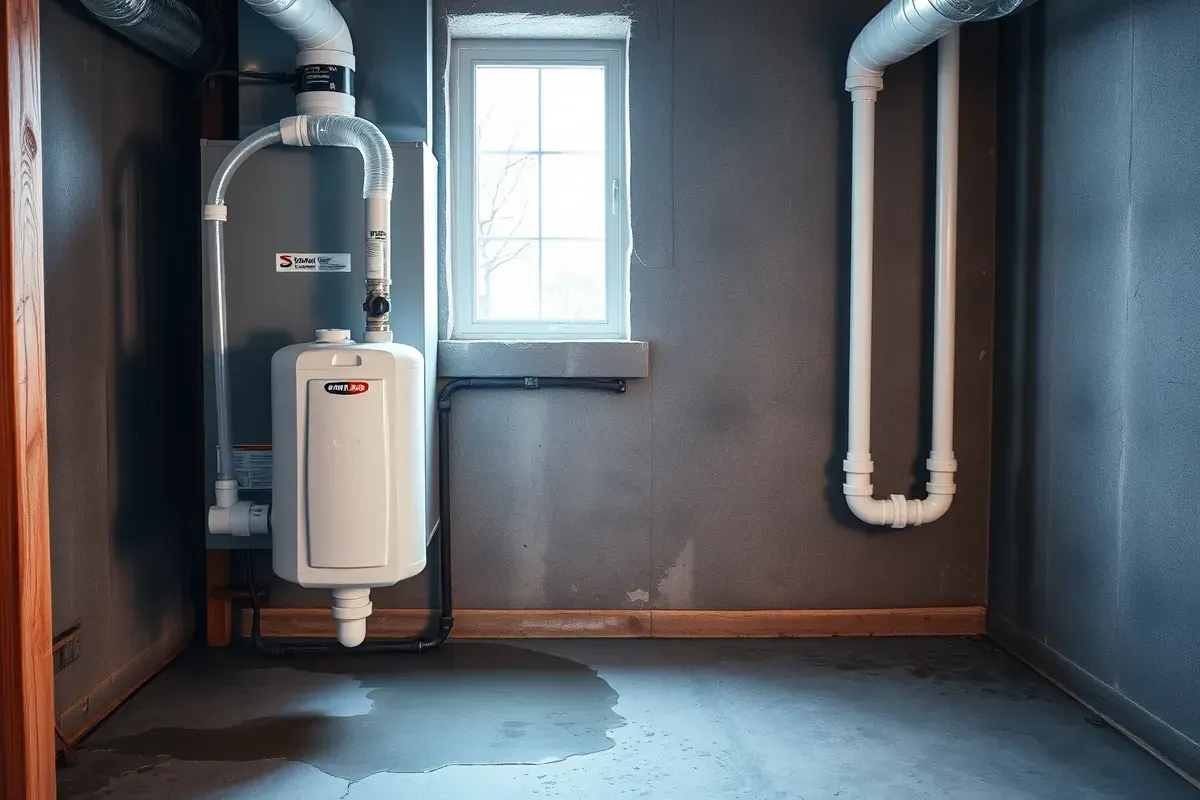
Water from the furnace, and sometimes the AC coil and a water heater, drips into the pump's small tank. A float rises with the water and turns the motor on. The motor pushes the water up a thin plastic tube to a drain, then shuts off. A check valve stops the water from flowing back down into the tank.
| Part | What it does | What goes wrong |
|---|---|---|
| Reservoir (tank) | Collects water from the furnace and coil | Fills with sludge, algae and rust flakes |
| Float | Turns the pump on as water rises | Sticks in sludge, so the pump never starts |
| Motor and impeller | Pushes the water up and out | Wears out, hums but does not pump |
| Check valve | Stops water from flowing back | Sticks or clogs, so the pump runs over and over |
| Discharge tube | Carries water to a drain | Kinks, clogs or freezes where it runs outside |
| Safety switch | Shuts off the furnace if the tank gets too full | Trips and leaves you with no heat |
What are the 6 most common causes?
The six common causes are a float stuck in sludge, a dirty reservoir, a discharge tube that is frozen or kinked, a clogged check valve, a pump that lost power, and a motor at the end of its life. A slow floor drain or laundry sink where the tube empties can look like a pump problem too.
- Stuck float. Slime builds up on the float so it cannot rise. The tank fills and the safety switch stops the furnace.
- Dirty reservoir. Furnace condensate is slightly acidic and grows algae, especially if the AC coil drains into the same pump in summer.
- Frozen or kinked tube. Tubes run through cold garages, crawl spaces or out a wall. In a Flagstaff cold snap they freeze solid.
- Bad check valve. If water runs back into the tank, the pump cycles on and off every minute and wears out.
- No power. A tripped GFCI outlet or an unplugged cord stops the pump without any warning.
- Worn motor. Pumps often last several years. A pump that hums but does not move water is near the end.
What can you safely check yourself?
Turn the furnace off at its switch and unplug the pump first. Then check the outlet, empty and rinse the tank, clean the float, and look along the tube for kinks or ice. Pour a little water into the tank after you plug it back in to see if it starts and pushes water out.
- Power off. Switch off the furnace and unplug the pump.
- Check the outlet. Reset a tripped GFCI and make sure the plug is tight.
- Empty the tank. Lift the top off, pour out the water and wipe out sludge. A little mild dish soap and warm water is enough.
- Free the float. Move it up and down by hand. It should slide freely.
- Follow the tube. Look for kinks, crushed spots and ice where it passes through cold areas or exits the house.
- Test it. Plug the pump in, pour in a cup or two of water and watch it start and empty.
If the pump runs but water does not leave, the blockage is in the tube or check valve. If it does not run at all with water in the tank, the float switch or motor has likely failed. Do not bypass the safety switch to get heat back; that can flood the floor.
How do you keep the condensate line from freezing?
Route the discharge tube to an indoor drain, such as a floor drain, laundry sink or standpipe, instead of outside. If it must exit the house, keep the outdoor run as short as possible, slope it so water drains out, and insulate the parts that pass through cold spaces. Check it after every hard freeze.
Flagstaff nights often drop well below freezing from November into April, and homes in Doney Park, Kachina Village and Continental see some of the coldest air. Our guide to a frozen furnace condensate drain covers the gravity drain side of the same problem. If the tube empties into a floor drain that is slow, see why a floor drain backs up, because a sluggish drain will make the pump overflow.
Condensing tankless water heaters make condensate too, and some share the same pump. If yours also has trouble in winter, this guide to common tankless water heater problems explains error codes and condensate issues.
What does it cost to fix?
Cleaning the pump and tube yourself costs nothing. If the pump empties into a clogged floor drain, clearing that drain usually costs about $150 to $350 in Flagstaff. A new pump is a small part, but the price depends on the model and how it is wired to the furnace, so it is quoted on site.
| Service | Approx. price |
|---|---|
| Floor drain cleaning | $150 – $350 |
| Sink, tub or shower drain cleaning | $125 – $325 |
| Main sewer line cleaning | $250 – $550 |
| Sewer camera inspection | $200 – $450 |
If several drains in the basement are slow at once, the problem may be in the main line, not the pump. Our sewer camera inspection cost guide explains what a camera check shows, and heavy buildup is cleared with hydro jetting services.
When should you call a pro?
Call if the furnace will not stay on after you clean the pump, if water keeps spilling, if the drain the pump empties into is backing up, or if you smell sewer gas near a floor drain. Call an HVAC company for furnace wiring and error codes, and a drain company for the drain the water goes into.
- Water on the floor that keeps coming back.
- Furnace shuts off over and over in cold weather.
- Floor drain or laundry sink slow or gurgling.
- Sewer smell in the basement or utility room.
Frequently asked questions
Why did my furnace stop when the condensate pump filled up?
Many condensate pumps have a safety switch wired to the furnace. When the water in the pump gets too high, the switch shuts the furnace off so it cannot overflow. Fixing the pump, the float or the discharge line lets the furnace run again.
Can a condensate pump freeze in Flagstaff?
The pump itself is usually indoors, but the discharge tube often runs outside or through a cold crawl space or garage. When that tube freezes, water cannot leave, the pump fills, and the safety switch shuts the furnace off.
How do I know if my condensate pump is bad?
Signs include water around the pump, a pump that hums but does not empty, a pump that never turns on when the tank is full, a furnace that keeps shutting off, and a musty or sour smell from the reservoir.
Can I clean a condensate pump myself?
Yes, simple cleaning is safe. Turn off the furnace and unplug the pump, empty and rinse the reservoir, clean the float, and check the tubing for kinks or ice. Leave electrical repairs and furnace wiring to a pro.
Where should a condensate pump drain?
Into a floor drain, laundry sink, standpipe or another approved drain, not onto the ground next to the house where it can freeze. If the drain it empties into is slow, the pump can back up even when it is working.