What should you do if your main sewer line freezes?
Stop using water right away, because nothing can leave the house and every flush or shower adds to the backup. Do not pour boiling water, salt or chemicals into the drains. Warm the crawl space or garage where the line leaves the house if you can do it safely, then call for a professional thaw with steam or warm-water jetting.
Flagstaff sits near 7,000 feet, and January nights below zero are not unusual, with even colder air settling into low spots like Kachina Village, Mountainaire, Bellemont and parts of Doney Park. Most main sewer lines are buried deep enough to stay above freezing. The ones that freeze are the exceptions: shallow lines, lines in open crawl spaces, and lines that sit nearly empty for days. When yours does, our sewer line cleaning in Flagstaff crews work 24/7.
What are the signs of a frozen main sewer line?
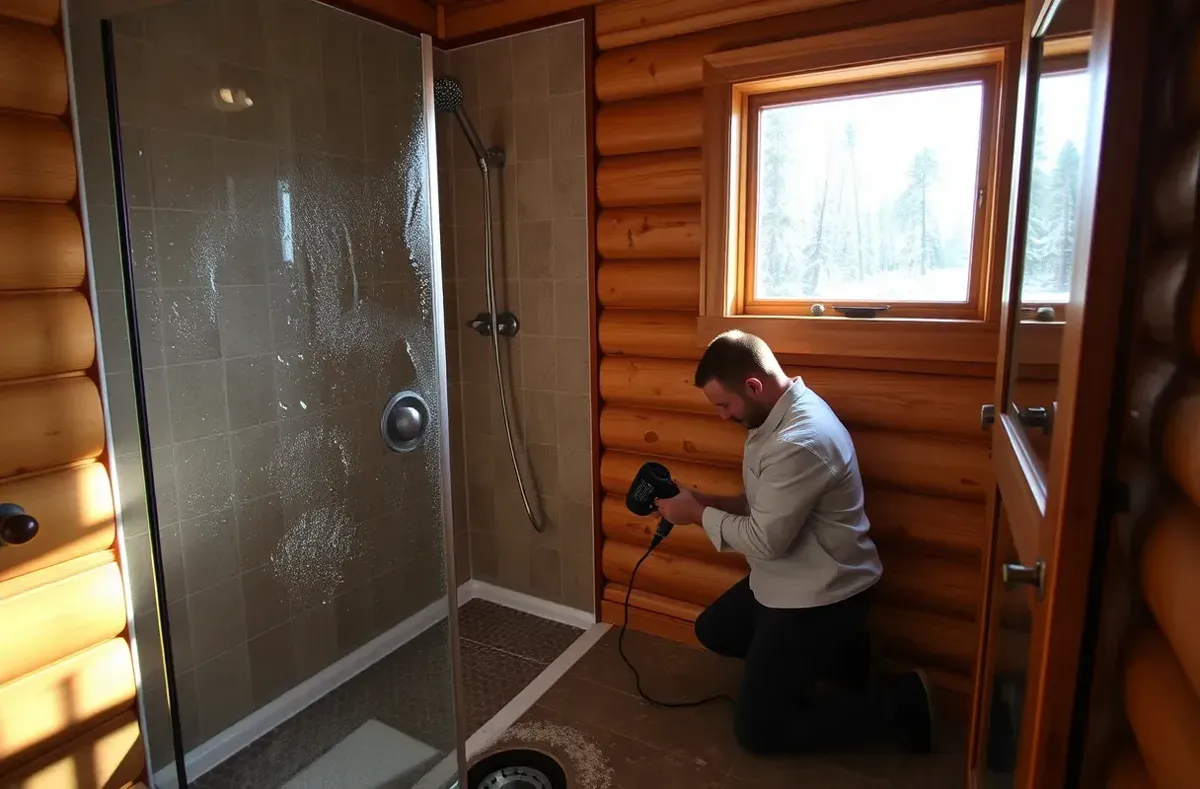
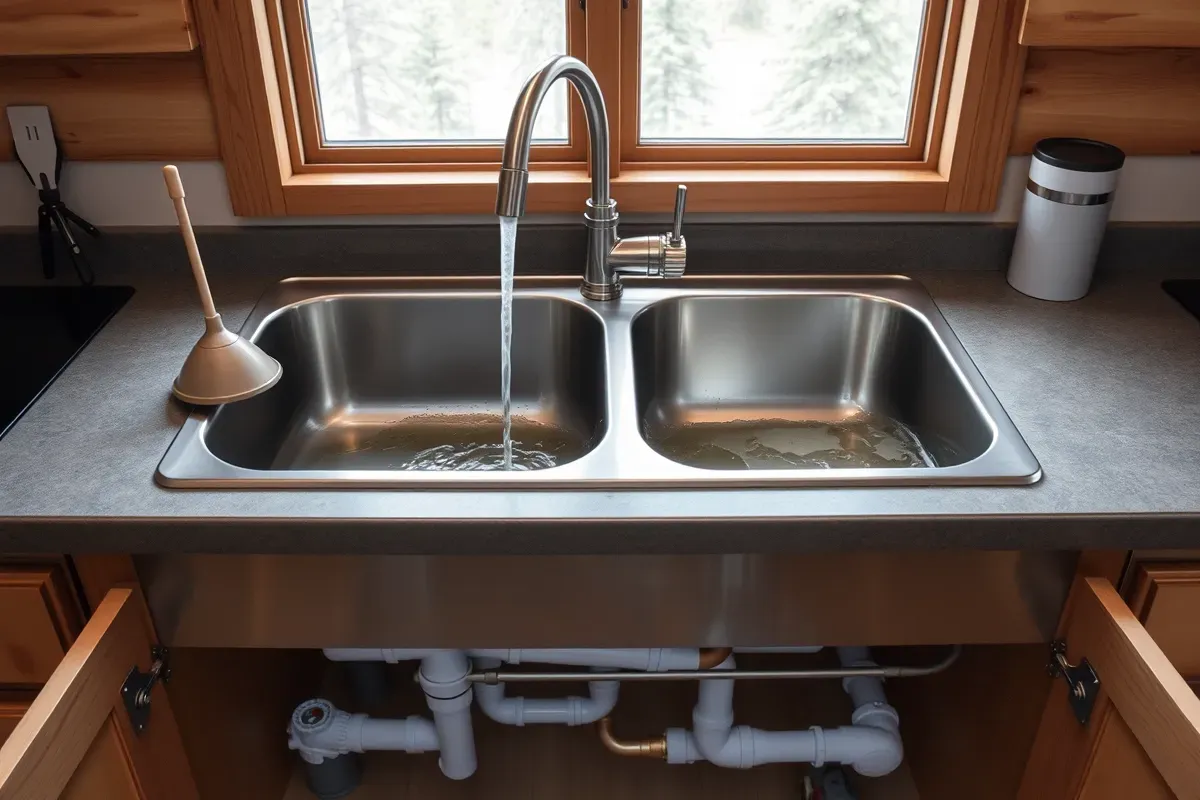
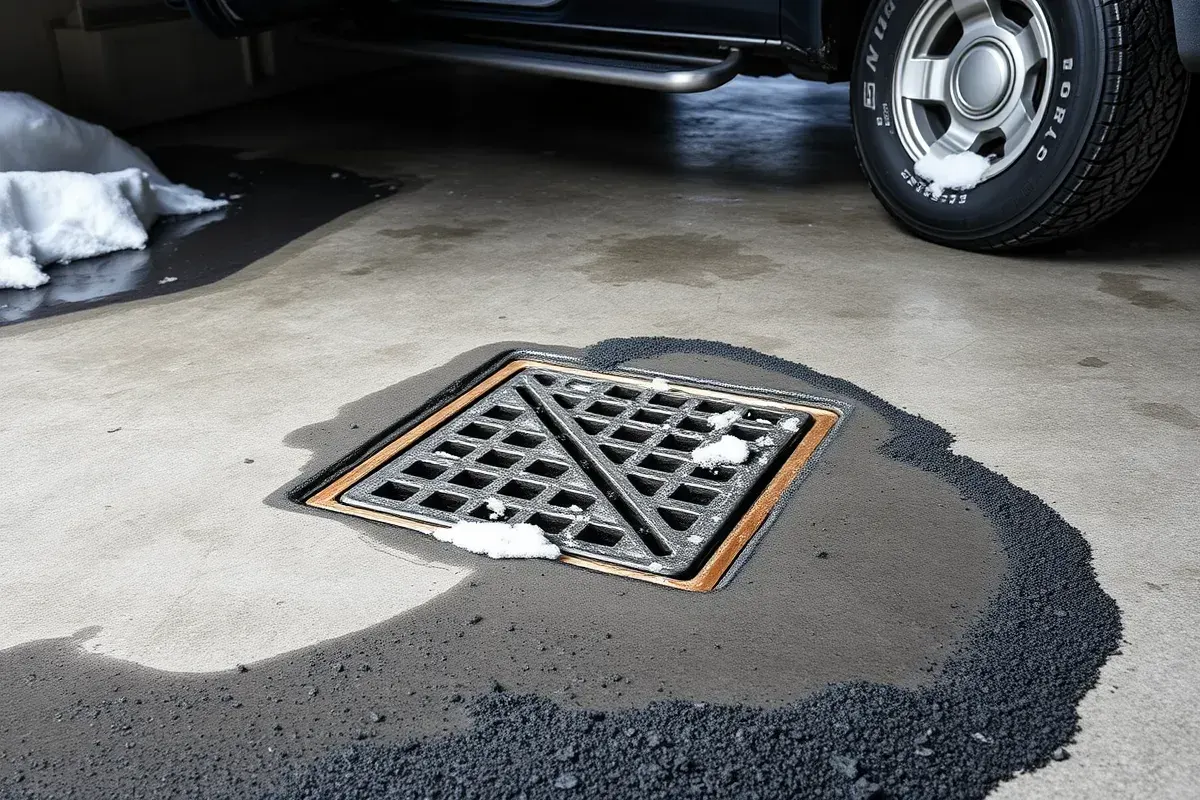
The six main signs are water backing up in the lowest drain when you flush, several fixtures draining slowly at once, gurgling in toilets and tubs, water rising in the floor drain or basement shower, an outdoor cleanout cap that is iced over or full of ice, and all of it starting after several nights below about 10 degrees.
- Backups at the lowest drain, often a basement shower, floor drain or first-floor tub, when a toilet is flushed.
- Every fixture is slow, not just one sink. That points to the main line, not a branch.
- Gurgling in toilets when the washer drains or the tub empties.
- The washing machine overflows at the standpipe during the drain cycle.
- An icy cleanout. If you open the outdoor cleanout cap and see ice or standing water near the top, the blockage is downstream of it.
- The timing. It started after a cold snap, often in a home that was empty for a weekend or a week.
Why do main sewer lines freeze in Flagstaff?
Sewer lines freeze when cold reaches the pipe and only a little water flows through it. Flagstaff's frost depth is deeper than most of Arizona, so lines that were buried shallow, run through an open crawl space, pass under a plowed driveway or exit above grade on a slope are most at risk. A slow drip from a leaking faucet or running toilet can build ice layer by layer.
- Shallow burial. Lines on rocky lots, where crews hit basalt and stopped short, sit closer to the frost line.
- Crawl spaces. Open vents and missing skirting let wind blow straight across the building drain.
- Driveways. Plowed and packed snow lets frost drive deeper than under an insulating snow layer on the lawn.
- Vacant homes. Second homes, rentals and cabins with little water use do not move enough warm water to keep the line clear.
- Trickles. A dripping fixture sends a thin stream that freezes in a sag or belly before it reaches the street.
Sags matter too. A line with a belly or low spot holds water, and standing water is what freezes first.
Is it ice or a regular clog?
Weather and history are the best clues. Ice shows up suddenly after a hard freeze and may ease on a warm afternoon. A clog from grease, wipes or roots builds over weeks, often with odors and repeat slow drains, and does not care about the temperature. If you are not sure, a camera inspection shows ice, roots or a blockage in minutes.
| What you notice | Frozen main line | Clogged main line |
|---|---|---|
| How it started | Suddenly, after a cold snap | Gradually, over weeks |
| House use before | Empty or lightly used | Normal use |
| Cleanout | Icy or frozen near the top | Water standing, no ice |
| Odor | Little at first | Often a sewer smell |
| Changes with weather | Yes, may ease in afternoon sun | No |
Our guide to main sewer line clog signs has a simple test for telling a main line problem from a single slow drain.
What should you do while you wait for help?
Stop all water use, including the dishwasher, washer and ice maker. Fix or shut off any dripping fixture so it stops feeding the ice. Warm the crawl space, garage or basement where the pipe exits with a safe space heater, keeping it away from anything that can burn. Do not try to snake through ice with a rented auger.
- Tell everyone in the house not to flush or run water.
- Put towels around the lowest drain in case it backs up.
- Close crawl space vents and open cabinet doors to let heat in.
- If sewage has already come up, keep kids and pets out of the area and follow our sewer backup steps.
Avoid open flames, propane torches and heat guns near pipes or wood framing. Every winter, fires start in Flagstaff crawl spaces from well-meant thawing.
How do plumbers thaw a frozen sewer line?
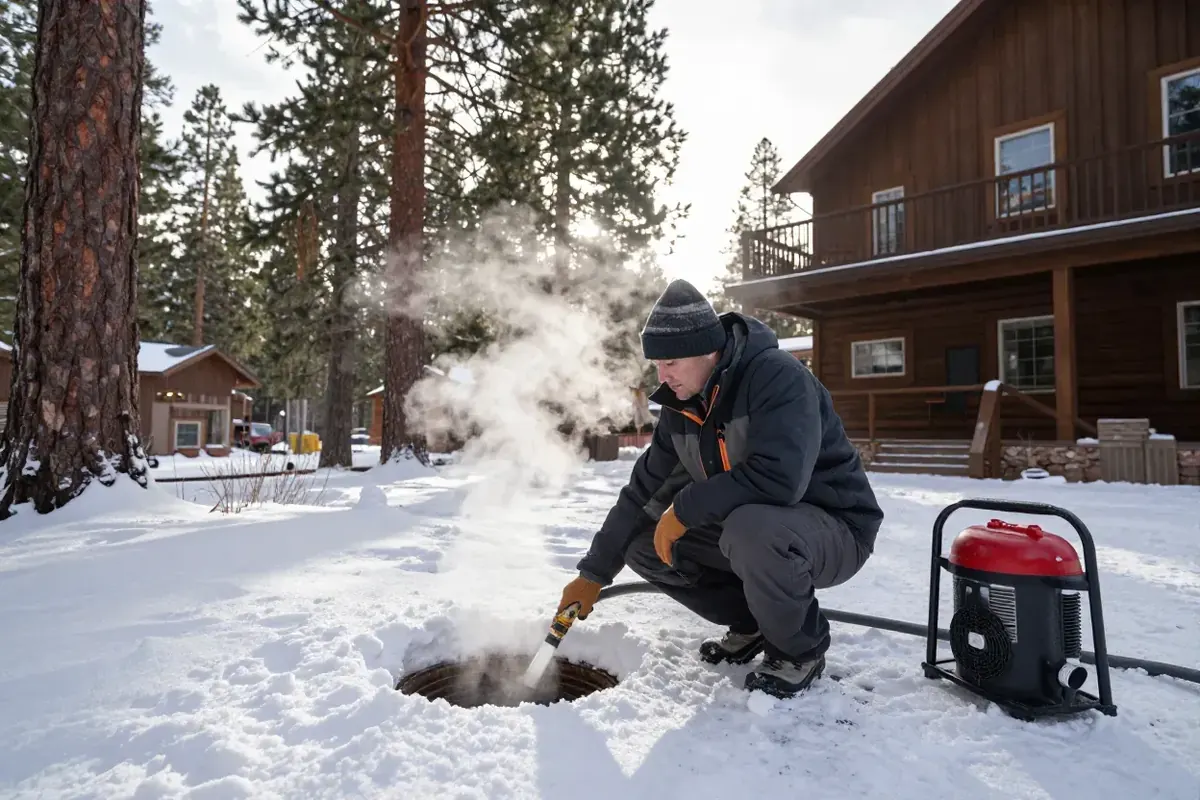
A plumber opens the cleanout closest to the frozen section and feeds a hose that sprays warm water or steam directly onto the ice. As the ice melts, the hose moves forward until the line runs freely. A jetter can then rinse out any debris the ice trapped, and a camera checks the pipe for cracks or a sag that caused the freeze.
This works because the heat goes straight to the ice instead of cooling on its way down a drain. Most frozen lines clear in one to three hours. Professional hydro jetting services also help when ice has mixed with grease, which is common in kitchen lines.
If there is no cleanout, the plumber may use a toilet flange or roof vent for access. In those homes, adding a two-way cleanout is worth discussing once the line is clear.
How much does it cost to thaw a frozen main sewer line in Flagstaff?
Main sewer line work in Flagstaff usually costs about $250 to $550. If hydro jetting is needed to clear ice mixed with grease or debris, expect about $450 to $1,000. A camera inspection to check for cracks or sags afterward runs about $200 to $450. Prices are estimates and are confirmed before work starts.
| Service | Typical Flagstaff cost |
|---|---|
| Main sewer line cleaning or thaw | $250 to $550 |
| Hydro jetting | $450 to $1,000 |
| Sewer camera inspection | $200 to $450 |
If the camera finds a crack or a crushed section, the repair is a separate quote. Our guide on who pays for sewer line repair in Flagstaff explains where your part of the line ends and the city's begins.
How do you keep your sewer line from freezing again?
Keep warm water moving through the line, keep cold air away from it and fix the reason it froze. Fix dripping fixtures, close or insulate crawl space vents in winter, keep snow cover over the line instead of plowing it bare, and ask about insulating or reburying a shallow section. In a vacant home, run warm water every day or fully winterize.
- Fix running toilets and dripping faucets before winter. They are the main cause of slow ice buildup.
- Insulate the building drain in crawl spaces and add skirting to mobile homes.
- Leave lawn snow in place over the sewer path. It insulates the ground.
- For second homes, have a property manager run a few gallons of warm water every couple of days, or follow our cabin winterizing steps.
- If the line froze once, get a camera inspection in spring to look for a sag that holds water.
Frequently asked questions
Can a main sewer line freeze in Flagstaff?
Yes. It is less common than a frozen supply pipe, but it happens during long cold snaps, especially where the line is shallow, runs through a crawl space or under a driveway, or carries only a trickle of water in a vacant home. Slow drips from a leaking faucet or toilet can build ice in the pipe over several nights.
How do I know if my sewer line is frozen or clogged?
A frozen main line usually stops after several nights in the single digits or below, often in a home that has been empty or lightly used, and the outdoor cleanout may be icy. A clog builds up over weeks, often with gurgling and odors, and does not track the weather. A camera inspection settles it.
How long does it take a frozen sewer line to thaw on its own?
It can take days, or until the weather warms, because the ground around the pipe stays frozen. Meanwhile every flush adds water that can back up into the house. Professional steam or warm-water jetting usually clears it in a few hours.
Should I pour hot water or salt down the drain to thaw a frozen sewer line?
No. The ice is usually far from the drain, so hot water cools before it reaches it and then adds to the backup. Salt and chemical drain openers can damage pipes and harm septic systems. Stop using water and call for a thaw.
How much does it cost to thaw a frozen sewer line in Flagstaff?
Main sewer line work in Flagstaff usually costs about $250 to $550. If hydro jetting is needed, it runs about $450 to $1,000, and a camera inspection to check for damage after the thaw costs about $200 to $450.