Why do Flagstaff cabins need their drains winterized?
Flagstaff sits near 7,000 feet, and winter nights often drop well below freezing. In an empty cabin or second home, water left in pipes, toilet tanks and drain traps can freeze and crack them. When the cabin warms up, the cracks leak. Winterizing means draining the water out and protecting the traps with a non-toxic antifreeze made for plumbing.
Cabins in Kachina Village, Mountainaire, Fort Valley, Munds Park and around Lake Mary see this most, since many sit empty for weeks at a time. If a pipe has already frozen, see our guide to a frozen drain pipe.
What is the 8-step winterizing checklist?
- Shut off the main water valve and turn off the water heater (gas to pilot or vacation, or power off at the breaker).
- Open every faucet, hot and cold, starting at the top floor and ending at the lowest one.
- Drain the lines at the lowest drain valve or hose bib. If you have an air compressor and the right fitting, blow the lines out at low pressure.
- Flush every toilet and hold the handle down to empty the tank. Sponge out what is left.
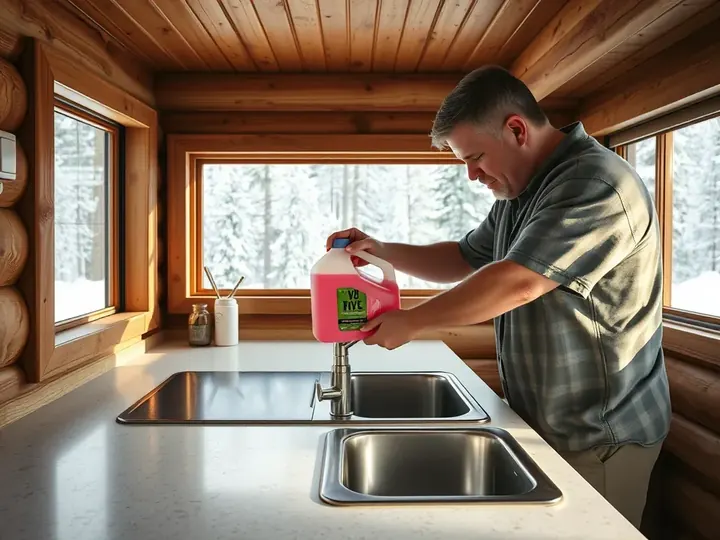
- Pour plumbing antifreeze into each sink, tub, shower and floor drain trap, and into each toilet bowl. Use the pink, non-toxic RV type. Never use car antifreeze.
- Drain the washer and dishwasher hoses, and disconnect outdoor garden hoses.
- Open cabinet doors under sinks so any leftover heat reaches the pipes.
- Label the main valve and leave a note listing what you drained, so the spring opening goes smoothly.
Why do drain traps need antifreeze?
Every sink, tub and floor drain has a curved trap that holds water to block sewer gas. You cannot drain a trap by opening a faucet, so the water stays put. If it freezes, the trap can split, and you will get a leak and a sewer smell when the cabin warms up. A cup or two of plumbing antifreeze in each trap keeps it from freezing and still blocks sewer gas.
A slow drain before you leave is worth fixing first. A partly clogged line holds more water, and that water can freeze into a solid plug. A clogged kitchen sink is the most common one we find in cabins after a busy fall season.
Should you leave the heat on or turn it off?
If you leave the water on, keep the heat set to at least 55°F and ask a neighbor to check the cabin after hard freezes and power outages. If the water is fully drained and the traps are protected, many owners set the heat lower. Either way, a smart thermostat or a freeze alarm that texts you is cheap insurance at this elevation.
Roof vents can also freeze shut in heavy snow, which makes drains gurgle and slow. Our guide on a plumbing vent blocked by snow explains what to watch for.
What if the cabin is on septic?
Many cabins outside city limits use septic. Use only RV plumbing antifreeze, since it is safe for septic tanks in normal amounts. Do not pump the tank right before winter unless it is due, because the water in the tank helps keep it from freezing. Keep snow on top of the tank and drain field as insulation, and do not drive or plow over them.
How do you open the cabin in spring?
- Close all drain valves and faucets you opened.
- Turn the main valve on slowly and listen for running water.
- Open each faucet until the air clears and the antifreeze flushes out.
- Check under every sink and around the water heater for drips.
- Run every drain for a minute. If one is slow or smells, the trap or line may have shifted.
When should you call a pro?
Call if a drain backs up or gurgles after you open the cabin, if you find a cracked trap or pipe, or if you would rather not winterize it yourself. Sink and tub drain cleaning in Flagstaff runs $125 to $325, and main line cleaning $250 to $550. Our drain repair Flagstaff team can fix cracked lines and gives you the price before work starts.
If the main line is slow every spring, hard-to-reach sediment and grease may be the cause, and hydro jetting services can clear the full pipe.
Frequently asked questions
What antifreeze is safe for cabin drains?
Use pink, non-toxic propylene glycol antifreeze sold for RVs and plumbing. Never use automotive antifreeze, which is toxic.
How much antifreeze goes in each drain?
About one to two cups per sink, tub and floor drain trap, and enough in each toilet bowl to cover the trap.
Can I just leave the heat on instead of draining the pipes?
You can, at 55°F or higher, but a power outage or furnace failure can still freeze the pipes. Draining is safer for long absences.
Do I need to winterize a cabin I visit every weekend?
Usually not fully, but keep the heat on, open sink cabinets, and use a freeze alarm in case the furnace stops.