What is a sewage ejector pump?
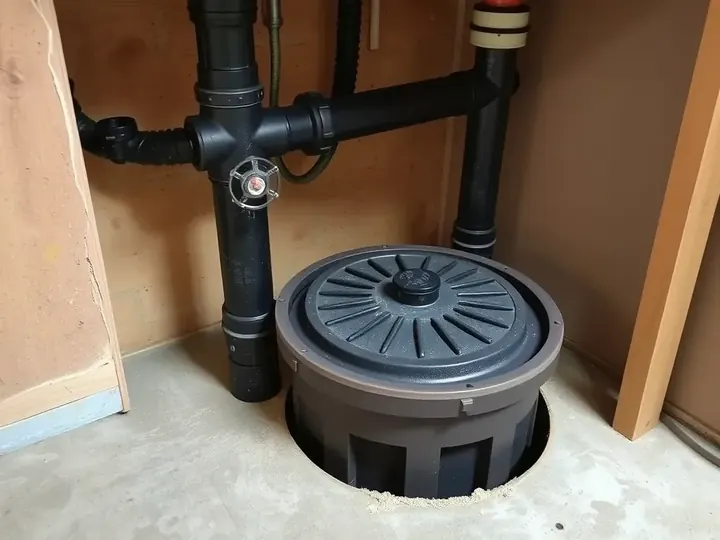
A sewage ejector pump moves waste uphill. When a basement bathroom, laundry or bar sink sits lower than your main sewer line, its drains flow into a sealed basin in the floor. When the basin fills, a float switch turns on a pump that pushes the waste up a pipe and into the main line. A check valve keeps it from flowing back down.
Many Flagstaff homes with finished basements or walkout lower levels, especially on sloped lots, have one. If yours stops working, the lower-level drains will back up fast. Our drain cleaning Flagstaff AZ team answers 24/7.
What are 6 signs your ejector pump has a problem?
- The alarm is beeping or its light is on. The water in the basin is too high.
- Basement drains back up or the toilet will not flush down.
- The pump runs nonstop or turns on and off every few seconds.
- Loud grinding, humming or rattling from the basin.
- Sewer smell in the basement, often from a loose lid seal or a dry vent.
- A thud or water hammer when the pump stops, which can mean a bad check valve.
What should you do first?
Stop using every drain on the lower level, including the washer if it drains into the basin. Check that the pump's breaker is on and that the plug or GFCI outlet has not tripped. Do not open the sealed basin lid yourself. It holds raw sewage and sewer gas, and the pump sits in wastewater next to electrical parts.
If upstairs drains are slow too, the problem is likely in the main sewer line, not the pump. Our guide to main sewer line clog signs explains how to tell. Knowing where your sewer cleanout is helps a tech reach that line fast.
What usually causes ejector pump trouble?
Most problems come from what goes down the drains. Wipes, paper towels, dental floss and grease wrap around the pump or jam the float. Other common causes are a float switch stuck up or down, a failed check valve, a clogged discharge pipe, a tripped outlet and a worn-out pump motor. Most ejector pumps last about 7 to 10 years.
| Symptom | Likely cause |
|---|---|
| Alarm on, pump silent | Tripped power, stuck float, failed motor |
| Pump runs but basin stays full | Clogged discharge pipe or jammed impeller |
| Pump cycles on and off fast | Bad check valve or float set too tight |
| Strong sewer smell | Loose lid seal or blocked vent pipe |
How do you prevent ejector pump problems?
- Flush only toilet paper. Even "flushable" wipes jam ejector pumps. See our flushable wipes guide.
- Keep grease out of a basement bar or kitchen sink.
- Test the pump every few months by running water into a basement drain and listening for it to start and stop.
- Test the alarm button if it has one.
- Keep the roof vent clear in winter, since a blocked vent can slow the basin from draining.
- Have the basin and discharge line cleaned when the main sewer line is cleaned.
When should you call a pro?
Call right away if the alarm is on, sewage is coming up, or the pump runs without moving water. A tech can clear the basin, check the float and check valve, and clean the discharge pipe. If the main line is also clogged, main line cleaning runs $250 to $550 in Flagstaff, and heavy grease may need hydro jetting services. Our drain repair Flagstaff crew quotes any repair before work starts.
Frequently asked questions
Can I use my basement bathroom if the ejector pump fails?
No. Without the pump, waste stays in the basin and will back up. Stop using all lower-level drains until it is fixed.
Why is my ejector pump alarm going off?
The water level in the basin is too high. The pump may have lost power, the float may be stuck, or the pump or discharge pipe may be clogged.
How long does a sewage ejector pump last?
Most last about 7 to 10 years. Wipes, grease and running it dry shorten that.
Is a sewage ejector pump the same as a sump pump?
No. A sump pump moves groundwater. An ejector pump moves sewage from toilets and drains in a sealed, vented basin.