Does homeowners insurance cover a sewer backup?
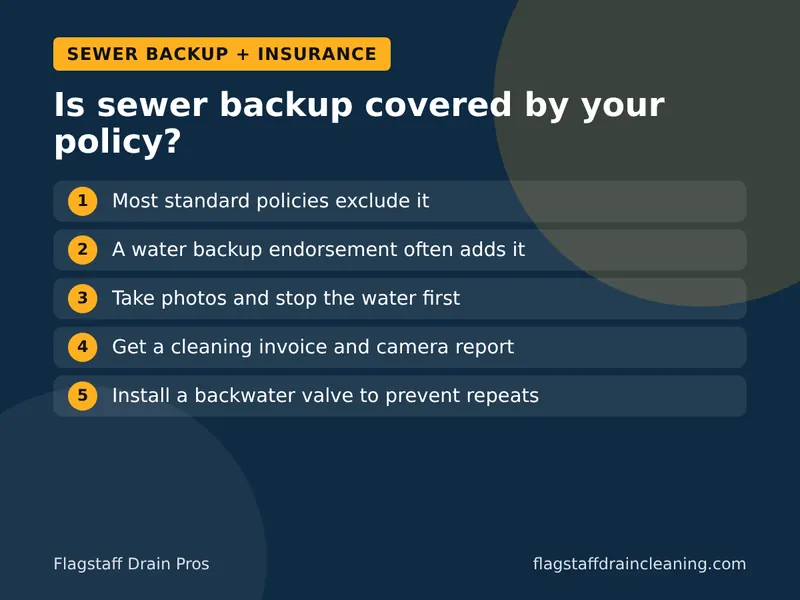
Usually not, unless you added coverage. Most standard homeowners policies exclude water that backs up through sewers or drains. Many insurers sell a "water backup" or "sewer backup" endorsement for a small yearly cost. It typically pays for cleanup and damaged belongings up to a set limit, but not for repairing the sewer pipe itself.
Every policy is different, so read yours or ask your agent. This guide explains the common terms and what helps when you file. For the cleaning itself, call our drain cleaning Flagstaff AZ team 24/7.
What is usually covered and what is not?
- Often covered with a backup rider: cleanup, drying, damaged flooring, drywall and personal items, up to the rider limit.
- Often not covered: the cost to clear or repair your own sewer line, damage from wear, tree roots or a line that was already failing.
- Flood is different: water from outside, like snowmelt runoff or a monsoon flood, usually needs separate flood insurance.
- City main backups: if the city main was blocked, you may be able to file a claim with the city. Ask the City of Flagstaff water services office.
What does a sewer backup rider add?
A water backup rider adds coverage for damage caused when water or sewage comes up through drains, toilets or a sump pump. Limits often start around $5,000 to $10,000 and can go higher. If you have a finished basement or a home with a history of backups, ask your agent about a higher limit.
Homes in older Flagstaff neighborhoods with clay pipe and big ponderosa pines are at higher risk from tree roots in the sewer line. Those homes benefit most from the rider.
What 5 steps help a sewer backup claim?
- Stop the water. Stop using all fixtures. Open the sewer cleanout cap if you can do it safely, so water drains outside.
- Take photos and video of the water, the drain it came from and every damaged item before cleanup.
- Call your insurer early. Ask what they need and whether they send an adjuster.
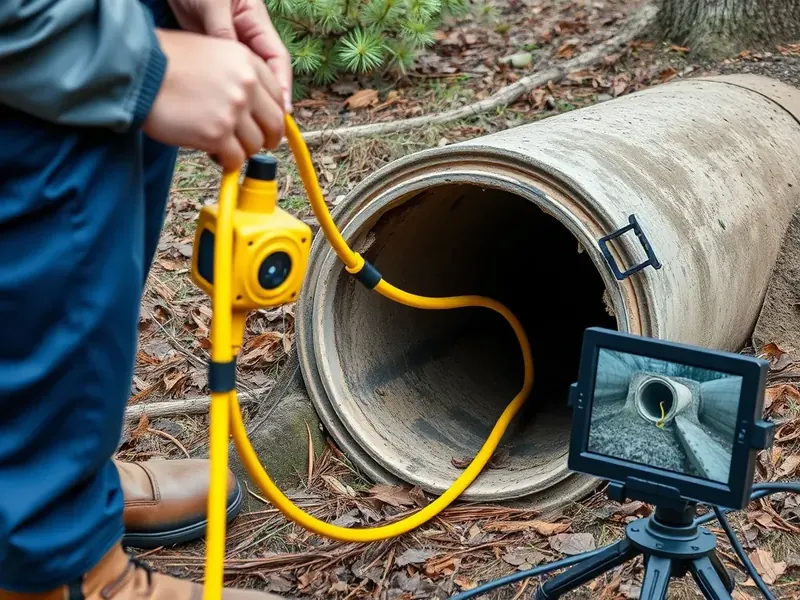
- Get the cause in writing. A drain cleaning invoice and a camera report that show roots, grease or a broken pipe help explain what happened.
- Dry the home fast. Wet drywall and carpet can grow mold in 24 to 48 hours. Keep receipts for fans, cleanup and hotel stays.
Our step-by-step guide on what to do after a sewer backup covers safe cleanup.
How can you prevent the next backup?
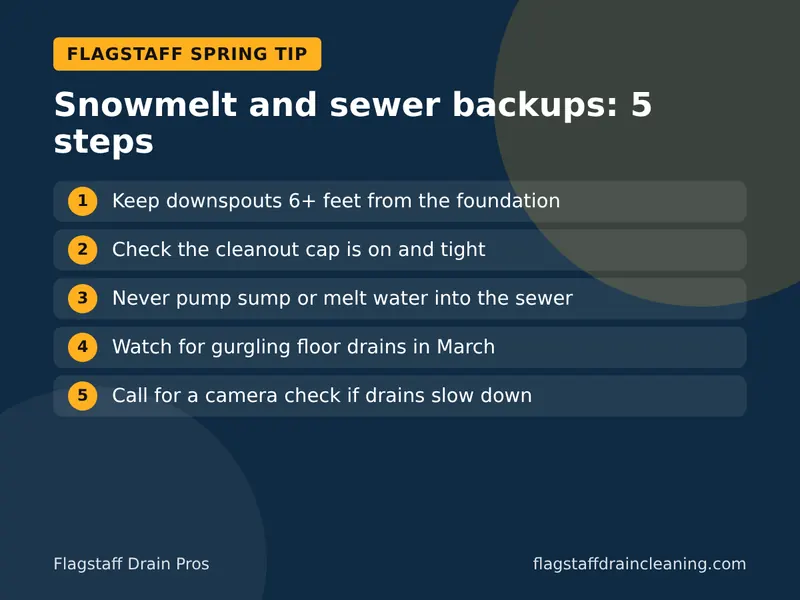
- Have the main line cleaned before winter, then on a schedule. See how often to clean a sewer line.
- Add a backwater valve if the home has a basement or low floor drain.
- Keep grease, wipes and paper towels out of the drains.
- Get a camera inspection if the line backs up more than once a year.
When should you call a pro?
Call right away if sewage is coming up through a floor drain, tub or toilet. A tech clears the main line and can run a camera to show the cause, which also helps your claim. Main line cleaning in Flagstaff runs $250 to $550, and a camera inspection runs $200 to $450. Call Flagstaff drain cleaning at (928) 352-0514.
Frequently asked questions
Is sewer backup covered by homeowners insurance?
Not on most standard policies. You usually need a water or sewer backup endorsement added to your policy.
Does insurance pay to fix the sewer line?
Usually not. Backup coverage pays for damage inside the home. Repair of a worn, cracked or root-filled sewer line is normally the owner's cost.
Is a sewer backup the same as a flood?
No. A backup comes up through your drains. A flood is surface water from outside, which usually needs separate flood insurance.
What proof helps a sewer backup claim?
Photos and video of the damage, a dated drain cleaning invoice and a camera report that shows the cause of the backup.