Why does a garbage disposal clog?
A disposal grinds food into small bits, but the bits still have to flow through the trap and the drain line. Grease, starch and stringy peels clump together in the pipe past the disposal. Running too little water, or grinding a lot at once, makes it worse. Most clogs are in the drain just past the disposal, not in the disposal itself.
If you have a double sink, a clog past the disposal often makes water come up in the other side when the disposal runs.
What should never go down a disposal?
Keep out fats, oils and grease, starchy foods like rice and pasta, potato and onion peels, stringy foods like celery and corn husks, coffee grounds, eggshells in large amounts, bones, fruit pits, and anything that is not food. These either harden, swell, or wrap around the blades and clog the drain.
- Grease, oil and fat, even if it is liquid when hot
- Rice, pasta and bread, which swell with water
- Potato peels, which turn into a thick paste
- Celery, corn husks and artichokes, which are stringy
- Coffee grounds, which pack into a sludge
- Large amounts of eggshells
- Bones and fruit pits
- Onion skins
- Paper towels, wipes and twist ties
- Chemical drain cleaner, which can harm the disposal and the pipes
Grease is the number one cause of kitchen drain clogs. See our holiday drain tips for how to get rid of cooking fat.
How do I clear a clogged disposal safely?
Turn off the disposal and unplug it or switch off its breaker before anything else. Never put your hand inside. If it hums but does not spin, use the hex key in the bottom of the unit to turn the blades free, then press the reset button. If water still sits in the sink, the clog is likely in the trap or drain line.
- Turn off power at the switch and the plug or breaker.
- Use tongs and a flashlight to remove anything you can see.
- Turn the hex socket on the bottom back and forth with the small wrench.
- Press the red reset button on the bottom.
- Restore power, run cold water and test the disposal.
What if the sink still will not drain?
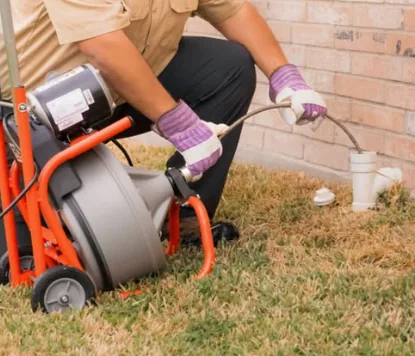
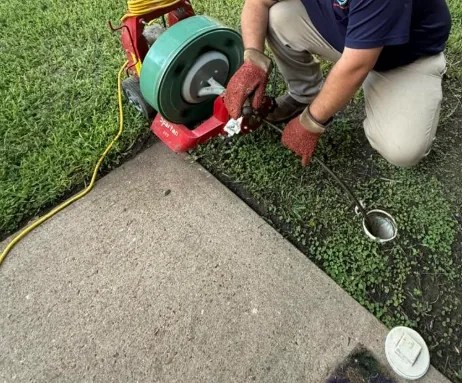
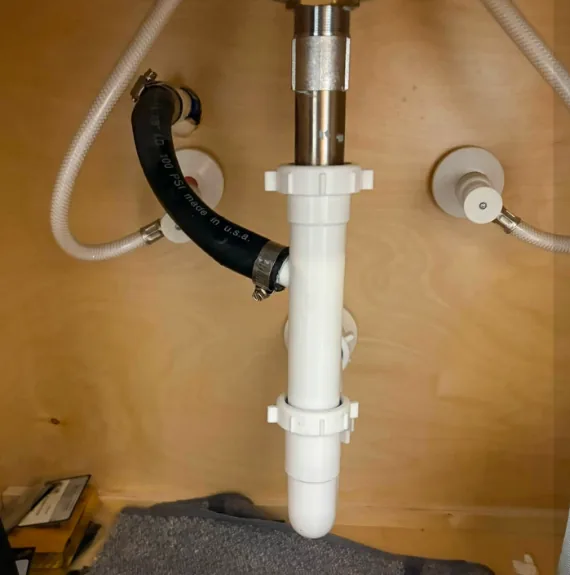
Then the clog is in the P-trap or the drain line in the wall. You can remove the trap with a bucket under it and clean it out. If the trap is clear, the clog is further in the wall. A hand snake can reach short clogs, but grease clogs deep in the line often need a drain machine.
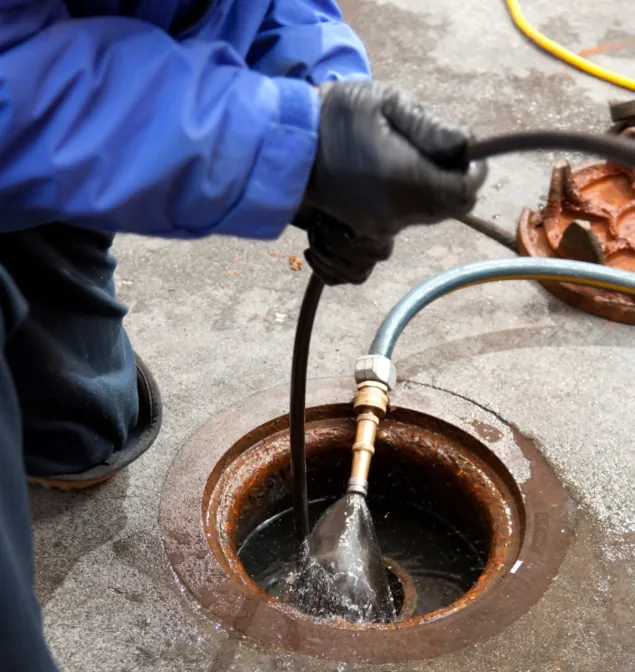
See our guide to a clogged kitchen sink and how to use a drain snake safely. If the dishwasher drains into the disposal, a clog can stop it too. Read dishwasher not draining.
What habits prevent disposal clogs?
Run plenty of cold water before, during and for about 15 seconds after grinding. Feed food in a little at a time. Scrape grease and starchy leftovers into the trash. Grind a few ice cubes now and then to clean the blades, and keep chemical cleaners out of the disposal.
Homes on septic should use the disposal lightly, since food solids fill the tank faster. See slow drains in a septic home.
How much does it cost in Flagstaff?
Kitchen sink drain cleaning in Flagstaff usually costs $125 to $325. If the clog is in the main line, main sewer line cleaning runs $250 to $550. You get the price before work starts.
See our full drain cleaning cost table.
Frequently asked questions
Should I use hot or cold water with a garbage disposal?
Use cold water. It keeps grease solid so the disposal can chop it and push it through, rather than melting it into a coating on the pipes.
Why does my disposal hum but not turn?
Something is jamming the blades. Turn off the power, use the hex key on the bottom to free them, then press the reset button.
Can I put coffee grounds down the disposal?
It is best not to. Grounds pack into a thick sludge in the trap and drain line.
Why does water come up in the other sink when I run the disposal?
The drain past the disposal is clogged, so the water takes the easiest path, which is up the other side of the sink.