How do drains work in a septic home?
In a septic home, every drain flows into one building drain, then out through a short sewer pipe to the septic tank in the yard. Solids settle in the tank, and liquid flows on to the drain field. A clog can form in the pipes inside the house, in the pipe to the tank, or the tank itself can be too full to accept more water.
Most homes inside Flagstaff city limits are on City of Flagstaff sewer. Some homes on larger lots outside the city sewer area use a septic system instead. If you are not sure, your property records or a past home inspection will say.
What signs point to a drain line clog?
A drain line clog usually affects one fixture or one part of the house first. The kitchen may be slow while bathrooms are fine, or one bathroom backs up while others drain. Clearing that line often fixes the problem right away, and the tank does not need to be pumped.
- Only one sink, tub or toilet is slow.
- The kitchen clogs after big meals or holidays.
- Water backs up in the lowest drain when the washer drains.
- The pipe to the tank clogs with wipes, grease or roots, and the tank level looks normal.
See our guides to a clogged kitchen sink and shower and tub clogs.
What signs point to a full or failing septic tank?
A full or failing septic system tends to slow every drain in the house at once. You may also notice sewage odor in the yard, soggy or very green grass over the tank or drain field, or water that backs up in the lowest drain even with light use. These signs mean you need a septic company, not just drain cleaning.
- All drains are slow at the same time.
- Sewer smell outside near the tank or field.
- Wet, spongy ground or bright green grass over the field.
- It has been more than three years since the tank was pumped.
The EPA's septic care guide says most household tanks should be inspected every three years and pumped every three to five years.
What can I check myself?
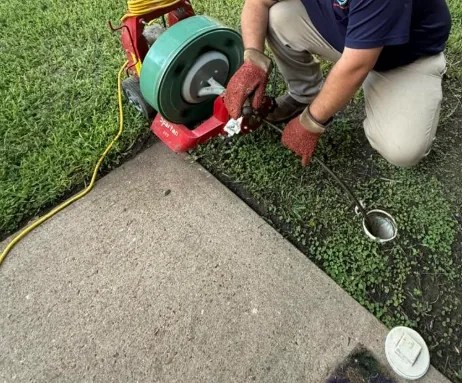
Count how many drains are slow, and note when the problem started. Look for the house cleanout near where the pipe leaves the home. If the cleanout is dry but the drains inside are backing up, the clog is in the house. If water stands in the cleanout, the problem is between the cleanout and the tank, or the tank itself.
Our cleanout location guide shows where to look. Do not open a septic tank lid yourself. Tank gases are dangerous.
How do I keep a septic home's drains clear?
- Flush only toilet paper. Wipes, even "flushable" ones, clog lines and tanks. See flushable wipes.
- Keep grease out of the sink.
- Spread laundry loads across the week.
- Skip harsh chemical drain cleaners, which can harm the tank's bacteria.
- Pump the tank on the schedule your septic company suggests.
Who should I call?
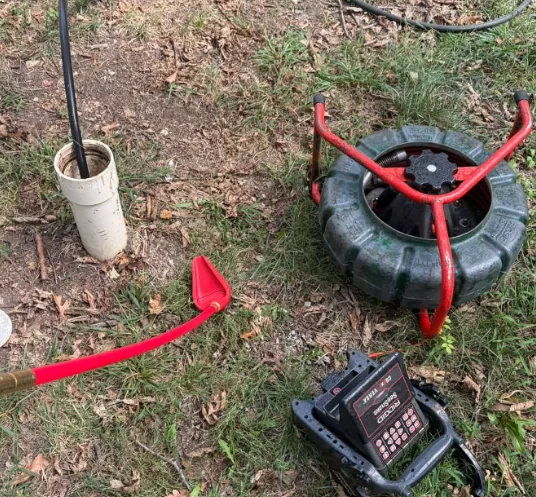
Call a drain pro when one fixture or one part of the house is slow, or when the line to the tank is clogged. Call a septic company to pump or inspect the tank and drain field. We clean drain lines and can run a camera to the tank, and we will tell you if the tank looks like the problem.
Main line cleaning in the Flagstaff area runs $250 to $550, a sewer camera inspection $200 to $450, and sink or tub drain cleaning $125 to $325. You get the price before work starts. See our cost table and sewer camera inspection page.
Frequently asked questions
Do you pump septic tanks?
No. We clean drain lines inside the home and the pipe to the tank. For pumping or drain field work, call a licensed septic company.
Can a clogged drain line look like a full septic tank?
Yes. A clog in the pipe between the house and the tank backs up drains the same way. Checking the cleanout and the tank level tells them apart.
Is drain cleaner safe for a septic system?
Harsh chemical drain cleaners can kill the helpful bacteria in the tank. Mechanical cleaning is a safer choice.
How often should a septic tank be pumped?
The EPA says most household tanks are pumped every three to five years, with an inspection about every three years.